Wednesday, May 21, 2014
How to Fix Ball Joints in a 1998 Honda Accord
If you notice that your steering wheel is loose and sloppy when you drive down the road, you may have a worn upper ball joint and upper control arm. Unlike the case with lower ball joints, which require specialty tools that are quite expensive, a home mechanic can replace the upper control arm and ball joint in part of an afternoon.
Instructions
- 1
Loosen the lug nuts on both of the front tires. Do this before attempting to lift the vehicle off the ground or the tire will spin as you try to loosen them.
2Raise the vehicle off the ground enough to lift the tires off the ground and place jack stands under the vehicle. Finish removing the tires once the vehicle is secure.
3Remove the cotter pin from the upper ball joint using a needlenose pliers. You do not need to save the cotter pin; you will use a new one for installation.
4Use the appropriate wrench to remove the castle nut at the top of the ball joint. Turn the wrench counterclockwise to remove the nut from the ball joint.
5Separate the ball joint from the steering knuckle using a two-jawed puller and remove the upper control arm from the vehicle.
6Install the new upper control arm assembly into the strut tower and connect the upper ball joint into the steering knuckle.
7Install the tires onto the front of the vehicle and lower the vehicle to the ground.
8Torque the nuts on the control arm and front wheels once the car is lowered to the ground. Torque the upper control arm to 47 foot-pounds. Next, tighten the castle nut to 32 foot-pounds and then tighten it enough beyond that point to install the new cotter pin. All of the wheel nuts should be tightened to 80 foot-pounds of pressure.

Sunday, May 18, 2014
How to Insert Loose Ball Bearings
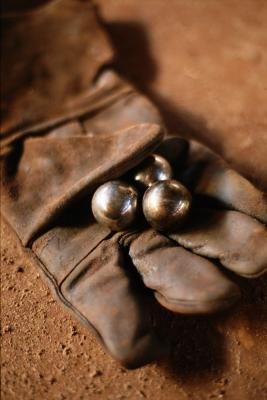
Found in virtually all moving mechanisms, bearings are hardly given a thought until something starts to grind -- or falls apart. Unlike caged or roller bearings, which are enclosed in a casing, loose ball bearings float freely between metal cups, or "races." Most are commonly found in older applications, loose bearings are used to maintain proper tolerances between two or more moving pieces of a rotating part, such as steering mechanisms or wheels. Since they are not secured inside a housing, loose bearings must be inserted one at a time.
Instructions
- 1
Apply a generous coat of bearing grease to both sides of the bottom bearing race by using your fingers. Insert the race into position, with the ridges on the grooves facing outward. If the tolerances are so close the race will not slide in place freely, tap the race into position with a wooden dowel, of the same diameter as the race, by tapping it with a rubber mallet. Check to ensure the race is seated evenly around the entire circumference of the installation point.
2Grease one ball bearing at a time and place each one in the groove of the race by using your fingers. Insert the bearing by using a pair of forceps or tweezers if the area is too small to reach with your fingers. Set the bottom bearing in place first, if working with a vertical surface. Stack the bearings up along each side of the race, and alternate placing bearings along the left and right sides of the race.
3Coat the top race with grease and insert the race with its grooves facing inward, creating a channel for the bearings between the two races.
4Place the cover plate over the outside race. Some plates will screw onto a threaded rod whereas others will free-float over the race; not all applications have cover plates. Tighten the locknut in place with a wrench.
Sunday, April 6, 2014
What Is a Rear Ball Joint
A ball joint links the console arms of the front and rear suspensions to the wheel hub assemblies of your vehicle. In some vehicles, the ball joints connect all components of the suspension.
Significance
Rear ball joints are sometimes used in vehicles that are front-wheel drive and have independent suspensions. In some newer vehicles, the rear suspension is assembled with ball joints to link all parts of the suspension together.
Function
The ball-and-socket design of the ball joint provides swivel room for the knuckles of the joint as the wheels of the vehicle are steered. It also allows the suspension to handle changes in the road as the vehicle is moving.
Considerations
If there is a problem with the ball joint, you might hear a knocking noise when your vehicle goes over small bumps in the road. Erratic steering and wandering are also indicators of problems with the ball joint.