Saturday, January 11, 2014
How to Tell if My Mustang GT Automatic Has Traction Lok
The limited-slip differential found in the Ford 8.8-inch rear end is called "Traction-Lok." Locking the rear axles together and equally supplying power to both rear wheels improves traction. As the Mustang GT turns a corner the wheel on the outside of the turn must travel a greater distance, at a greater speed, than the wheel on the inside of the turn. The limited slip differential allows the connection between the two axles to slip and allow the outside wheel to go faster to make the turn smoothly.
Instructions
- 1
Park the Mustang GT on level ground. Secure the front wheels using wheel chocks. Kick the wheel chocks against the wheels using the heal of your foot so it cannot move while you are under it.
2Raise and support the Mustang using a floor jack and jack stands. Position the floor jack under the Mustang GTs rear-end (differential) and lift the car until the rear wheels are off the ground. Position jack stands under the rear axles (tubes that connect the differential to the wheels) and lower the car onto the stands.
3Place the transmission in neutral and release the parking brake. Turn the right rear wheel (by hand) and observe the left rear wheel. If the Mustang GT is equipped with "Traction-Lok" the left rear wheel will turn in the same direction and at the same speed as the right rear wheel. A properly operating limited-slip differential will cause the rear wheels to be difficult to turn by hand.

Wednesday, October 30, 2013
What to Do When an Engine Has Been Sitting More Than Five Years
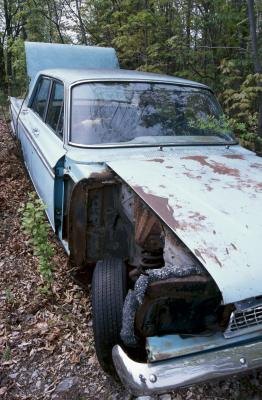
Heres a good way to mess with your friends the next time youre sitting at the local watering hole: ask them if cars are alive. Cars these days are composed of both synthetic and biological materials, they can react to outside stimuli such as heat and cold, they can reproduce (with the aid of a human symbiote) and they can even age. Resurrecting a long-stationary engine usually isnt a matter of simply turning the key; its more like waking an old lady from a very long nap.
Basic Issues
The biggest problem with restarting an old engine has to do with oiling. Oil, and its nefarious cousin, sludge, are supposed to coat every interior surface of your engine to keep everything slick and working properly. Over time, liquid oil either drains down into the pan or gets trapped somewhere in the engine, and sludge dries into charcoal. Obviously, lubricating an engine with air, rust and charcoal isnt the smartest thing you can do where longevity is concerned.
Critter Patrol
You might be surprised as to exactly how much stuff can get into an engine when it sits for a while, especially if theres no air filter on it. Thoroughly inspect your air intake tube for leaves and critters, and pull the carburetor or throttle body off to inspect the inside of the intake. Trust it: Your engine will not be happy if the intake valves happen to suck a birds nest, field mouse or snake into the combustion chambers. Dont assume everythings kosher if the air filters in place, either; bugs can crawl up through the tailpipe, through open exhaust valves and nest in the cylinders or intake manifold.
Prime the Pump
As mentioned in Section 1, oil will eventually drain out of everywhere its supposed to be, including the oil pump. The prescribed solution is to manually prime the oil pump using a drill and a specialized pump-priming shaft. This may not be possible for some engines, though; the worst case scenario is that youll have to pull the oil pump, pack it with petroleum jelly and reinstall it. The jelly will allow the pump to create a vacuum and pull oil from the pan. You might get lucky, though. Try installing a mechanics oil pressure gauge and bump the starter; it might produce oil pressure without priming.
All Systems Go
Once youve primed the pump and have established oil pressure with a priming shaft, disconnect the ignition system -- if its still connected -- and bump the starter a few times to ensure that oil goes everywhere it should. Spin the engine over a few times to blow anything in the engine out of it, and listen for unexpected sounds from the engine. Stop if you hear any kind of rattling, puffing or any other sound the engine doesnt normally make. Reconnect the ignition and give it a shot. If the engine doesnt start right away, then its probably due to a lack of fuel pressure. If you have a mechanical pump, just keep cranking the engine for about 20 seconds or until it catches.