Saturday, April 26, 2014
What Does OEM Car Parts Mean
Original equipment manufacturer car parts are identical to the parts installed in cars at the time theyre built. OEM is a term used when erring to these types of car parts.
Description
Most automobile makers do not manufacture the car parts used in the production of the vehicles they build. Hired manufacturing companies are used for this purpose.
Process
The OEM company builds the parts and puts them in boxes with the car manufacturers name on them. Customers may theore believe they are buying a part directly built by the car manufacturer.
Features
After a specified period of time, varying by manufacturer, the car parts manufactured by OEMs no longer are placed in boxes with the car manufacturers name. At this time, the parts are placed in boxes with only the OEM companys name on it. The parts are identical, but cost less because the brand name is no longer on the package.

Wednesday, November 27, 2013
OEM Torque Specifications of a 2001 Jeep Wrangler
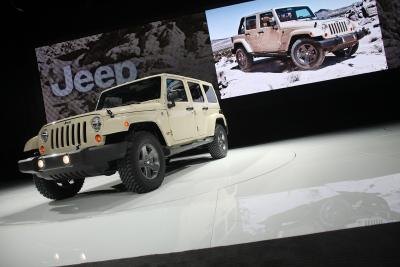
When performing repairs on a 2001 Jeep Wrangler, it is imperative that the correct torque is applied when installing certain bolts. The manufacturer calculates torque specs for the Wrangler based on a combination of bolt strength and the component it is holding. Torque values are verified by the use of a torque wrench that alerts the user of the proper torque through an audible signal, typically a clicking noise.
Lug Nuts
Lug nuts are very commonly just tightened until the nut no longer turns. Most inexperienced mechanics believe that the tighter the lug nut the better, but this is far from the truth. Over-tightening a lug nut stretches the threads of the wheel stud and can lead to breakage once it is heated from driving. This breakage can lead to the other wheel studs breaking due to excessive weight; the resulting domino effect can cause the wheel to fall off. The proper lug nut torque on the 2001 Jeep Wrangler is 110 foot-pounds.
Brakes
When performing brake repairs, each bolt has its own, equally important, torque specification. There are two sets of bolts on the brake system that have specific torque values: caliper bolts and brake hose bolts. The brake caliper bolts require a torque of 18 foot-pounds. The brake hose bolts have a rating of 23 foot-pounds.
Cylinder Head
The cylinder head on the Wranglers engine has a seal that must be torqued to the proper specs in order to seal correctly. The 2.5 liter 4-cylinder engine requires head bolts numbers 1 through 6 and 8 through 10 to have a final torque value of 110 foot-pounds, and bolt number 7 to have 100 foot-pounds of torque (see Resources for bolt numbering). The 4.0 liter engine requires bolt numbers 1 through 10 and 12 through 14 to have a final torque value of 110 foot-pounds and bolt number 11 to have a final value of 100 foot-pounds.
Exhaust Manifold
The exhaust manifold uses a compression-style gasket that requires proper torque to maintain a good seal. Bolt number 1 requires 30 foot-pounds and 2 through 7 require 23 foot-pounds (see Resources for bolt numbering). These values apply to both the 2.5 and 4.0 liter engines.
Oil Pan
The oil pan has two different fasteners, each having their own torque values: 1/4-inch bolts and 5/16-inch bolts. The 1/4-inch bolts require 85 inch-pounds of torque and the 5/16-inch bolts require 11 foot-pounds. These values apply for both the 2.5 and 4.0 liter engines.
Timing Chain Cover
The timing chain cover must be removed when performing timing chain maintenance. This cover has a seal and requires proper torque to obtain a good seal and prevent leaks. The bolts around the timing chain cover require 60 inch-pounds of torque on the 1/4-inch bolts and 192 inch-pounds on the 5/16-inch bolts.